
Marble Curtain RFQs: Mark the Pattern Direction
For a Marble Blackout Curtains RFQ, agree the pattern direction on a complete supplier reference before approving the appearance. Mark the top, bottom, visible face and the arrangement being proposed, then link the supplier’s response to the offered sample. This gives a wholesale curtains buyer a clear design decision without treating a catalogue photograph as a repeat specification or a measured product result.
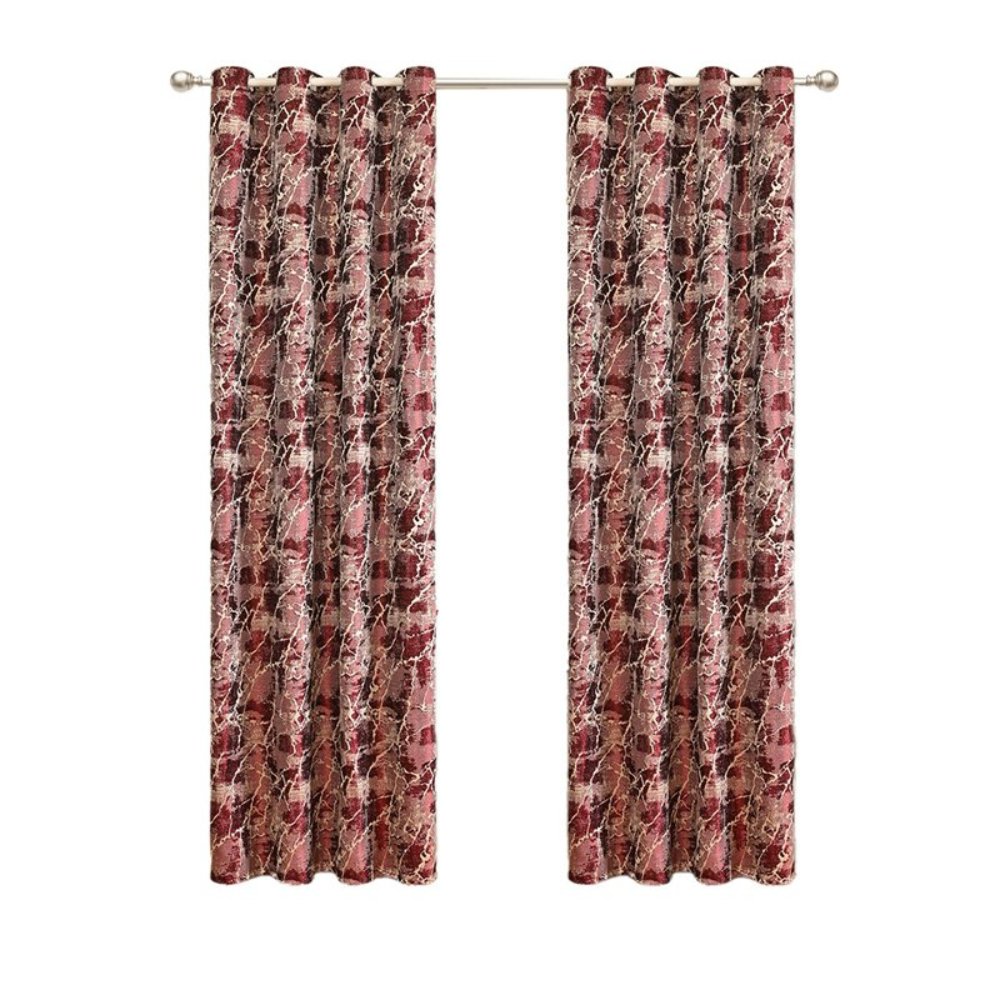
Separate Marble Blackout Curtains appearance with vein-like decorative pattern. The image does not define a supplied pair, numerical repeat or printing method.
Keep the marble design tied to its own product page
Start with the Marble Blackout Curtains page and retain its full product name in the enquiry. Its catalogue image shows a reddish-brown, vein-like decorative appearance. Use the image to identify the design being discussed and ask the supplier for the corresponding offered pattern reference.
The reviewed page does not supply a pattern code, repeat dimension or printing method. Request the supplier’s own identification rather than creating a supposed factory code from the image filename. The word marble names the catalogue design; it does not establish a stone material or explain how the decorative appearance is produced.
Mark direction on a complete panel reference
Ask the supplier to mark the intended top and bottom of the proposed panel. Keep its visible face identified on the same reference. A complete drawing or marked sample photograph lets the buyer discuss the direction of the vein-like areas without relying on an unlabelled crop that might be turned during a conversation.
When commenting on an area, give its marked position and the change being requested. For example, identify a particular section on the submitted reference rather than saying only that the pattern should face the other way. The supplier should return the corresponding revised reference so the buyer knows what was changed and which version is now proposed.
Buying field
Requested supplier response
Product reference
Marble Blackout Curtains and supplier pattern identity
Panel direction
Marked top, bottom and visible face
Pattern coverage
Complete proposed panel view and identified decorative areas
Arrangement if several panels are proposed
Supplier-marked relative positions, without assuming a supplied pair
Repeat description
Whether the supplier uses a repeat or another defined master reference
Sample decision
Accepted reference or a change against a named revision
Separate grey Blackout Curtains catalogue scene. Its design and room presentation are not the approved Marble pattern reference.
Ask how the proposed pattern is controlled
Request the reference the supplier uses to define the decorative arrangement for the offered panel. It may return a drawing, identified master sample or another stated reference. Record what is actually supplied, and ask how the photographed example corresponds to that proposal before treating it as the production appearance.
Do not assume that a marble-like design follows a fixed repeat, is deliberately random or can be placed at a particular location on demand. Ask the supplier to explain the arrangement it proposes. If a repeat is relevant, request its own description and basis; the reviewed catalogue gives no numerical repeat or pattern-placement tolerance to insert into the enquiry.
Describe multi-panel arrangements as a separate proposal
The catalogue scene shows more than one panel. If the buyer wants several panels considered together, ask the supplier to identify each proposed panel and its position in the submitted arrangement. Mark the relationship the buyer wants reviewed rather than assuming that the image defines matching, mirroring or continuous design across a joint.
Keep this appearance discussion separate from the quotation’s selling unit. An arrangement drawing can show how selected panels are proposed to look together without proving that a particular number is included in one purchase unit. Link the design decision and the commercial unit record through the same supplier proposal while retaining their separate questions.
Separate grey curtain product reference. Keep each selected design identity attached to its own supplier sample and proposal.
Compare the actual sample with the marked design
Request a sample submission that shows enough of the pattern to answer the buyer’s design question. A small central swatch may identify an appearance but leave the top-to-bottom arrangement unresolved. Ask the supplier to identify which parts of the full reference its submission represents, and request the remaining view where that information matters to the decision.
Keep the comparison about the declared pattern reference. Do not convert differences between room lighting, screen display or photograph framing into measured colour or print conclusions. If a specific appearance requirement needs another kind of reference, name that requirement and ask the supplier what supporting submission it proposes.
Retain the accepted direction with the offer
A focused enquiry can say: “Please identify the offered Marble Blackout Curtains pattern and return a complete reference marked with top, bottom and visible face. Explain the arrangement reference used for the sample. If several panels are proposed together, identify their positions and show any difference from the catalogue scene.”
Return the buyer’s decision against that specific submission and revision. Keep accepted details, requested changes and open questions visible in the same record. If an alternative appearance is proposed later, request its own marked reference before transferring the earlier decision. This preserves a concrete pattern approval without adding a material, test, availability or delivery promise to the catalogue description.
Buyer FAQ
Does the image define a repeat size?
No repeat dimension is stated. Ask the supplier whether it uses a repeat or another identified arrangement reference for the offered design.
Do the pictured panels prove a matching supplied pair?
The image provides an appearance arrangement. Confirm both the proposed design relationship and the separate selling unit with the supplier.
What should the buyer approve?
An identified complete pattern reference with direction, face and any proposed panel positions, linked to a named sample revision.
Retain the separate Marble product identity.
Mark direction and the complete proposed arrangement.
Record the sample decision against the supplier reference.
wholesale curtainsB2B supplier sample record